Gas generator installation, commissioning and service
Gas genset projects turnkey: engineering design, foundation or container, gas train, exhaust, switchboard, commissioning, then scheduled maintenance and repairs.
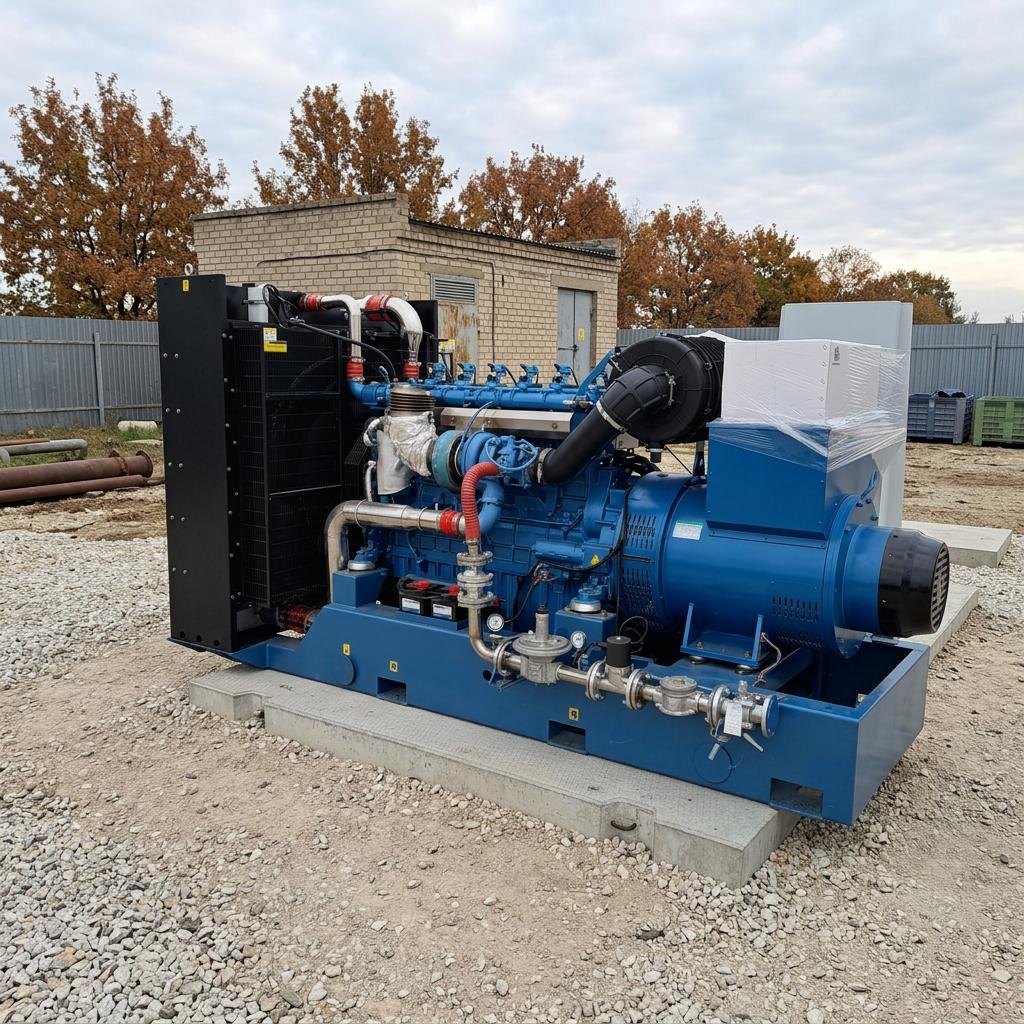
The genset is half of the project. The other half is the foundation, a gas supply with the right volume and pressure, the exhaust line, ventilation, the switchboard and the connection to the load. Deadlines are usually lost here, in gas approvals started a month later than they should have been, not in equipment delivery.
After start-up we keep the units running: scheduled maintenance by the factory schedule, oil and consumables, repairs and remote monitoring.
From request to start-up
Load profile, gas analysis, available volume and pressure. This decides the size and number of units.
Site layout, foundation or container, gas train, exhaust line, ventilation, switchboard and connection to the load.
Weichai in about 30–60 days, Yuchai and Jichai in 45–100 days from order.
Usually two to three weeks on a prepared site. Commissioning is quoted with the project.
Training of your staff, handover of procedures and the maintenance schedule.
Scheduled maintenance, oil and consumables, repairs, remote monitoring under a service contract.
Service after start-up
Every 500–1,000 operating hours depending on the model: oil, filters, spark plugs, valve clearances by the factory schedule.
Low-ash gas engine oil chosen for the engine and the gas composition. We bring it with the service visit.
60,000 operating hours on Weichai if the schedule is followed: about seven years of 24/7 operation. Plan the overhaul budget in advance.
Weichai: 24 months or 8,000 operating hours. We do warranty service ourselves, so supplier and service company are the same.
What to look at
Not the genset size but the gas volume and pressure at peak decide whether the project happens. Approval with the gas utility takes longer than building and delivering the unit, so it starts first.
In a container, ventilation, the gas train, the exhaust and the switchboard are assembled at the factory. On site you need a prepared base, a gas supply and a cable outlet: the shortest way to start-up.
The longer the line and the more bends it has, the higher the back pressure and the worse the engine runs. An exhaust mistake reduces power and hours to overhaul and is expensive to fix after installation.
We do the whole scope ourselves, or hand the unit to your installer with the procedures and installation supervision. The second option is cheaper if you have your own crew.
Weichai warranty: 24 months or 8,000 operating hours; scheduled maintenance every 500–1,000 operating hours; 60,000 operating hours to major overhaul.
Related pages
Case studies and articles
Questions
What must be ready on site before the genset arrives?
A level base rated for the weight of the unit, a gas supply with confirmed volume and pressure, an electrical connection point and access for a crane. For a container that is enough: no building is needed.
How long does the whole cycle take?
Delivery takes 30–60 days for Weichai and 45–100 days for Yuchai and Jichai; installation and commissioning usually take two to three weeks. The real timeline is often set by the gas: if the technical conditions already exist, we fit into the delivery time.
Do I need a design and permits?
For the gas part, yes: gas work is done by a licensed contractor under an approved design. The scope of approvals depends on the power, the pressure in the supply pipeline and the category of the site. We will tell you what applies before the work starts.
Do you service gensets bought elsewhere?
Yes, if it is a gas genset in the power range we work with. Before we start we run a diagnostic inspection and record the condition of the unit.
How much does service cost?
It depends on the model, the operating hours and the distance to the site. Tell us the model, the hours and the address, and we will send an estimate for scheduled maintenance and for annual service.
What oil does a gas engine need?
Low-ash oil for gas engines; the ash class is chosen for the engine and the gas composition. Automotive oil does not work: ash deposits on the valves and in the combustion chamber lead to an early overhaul.
What should I do if the genset stops?
Read the fault code on the control panel and do not restart the unit repeatedly: with some faults a restart adds to the repair bill. Call us with the code: some cases are solved by phone, the rest by a site visit.
Talk to the team
We answer in English. Tell us what you are looking for (hosting, equipment or an investment) and we will come back with numbers, documents and, if you wish, a video tour or a site visit.